
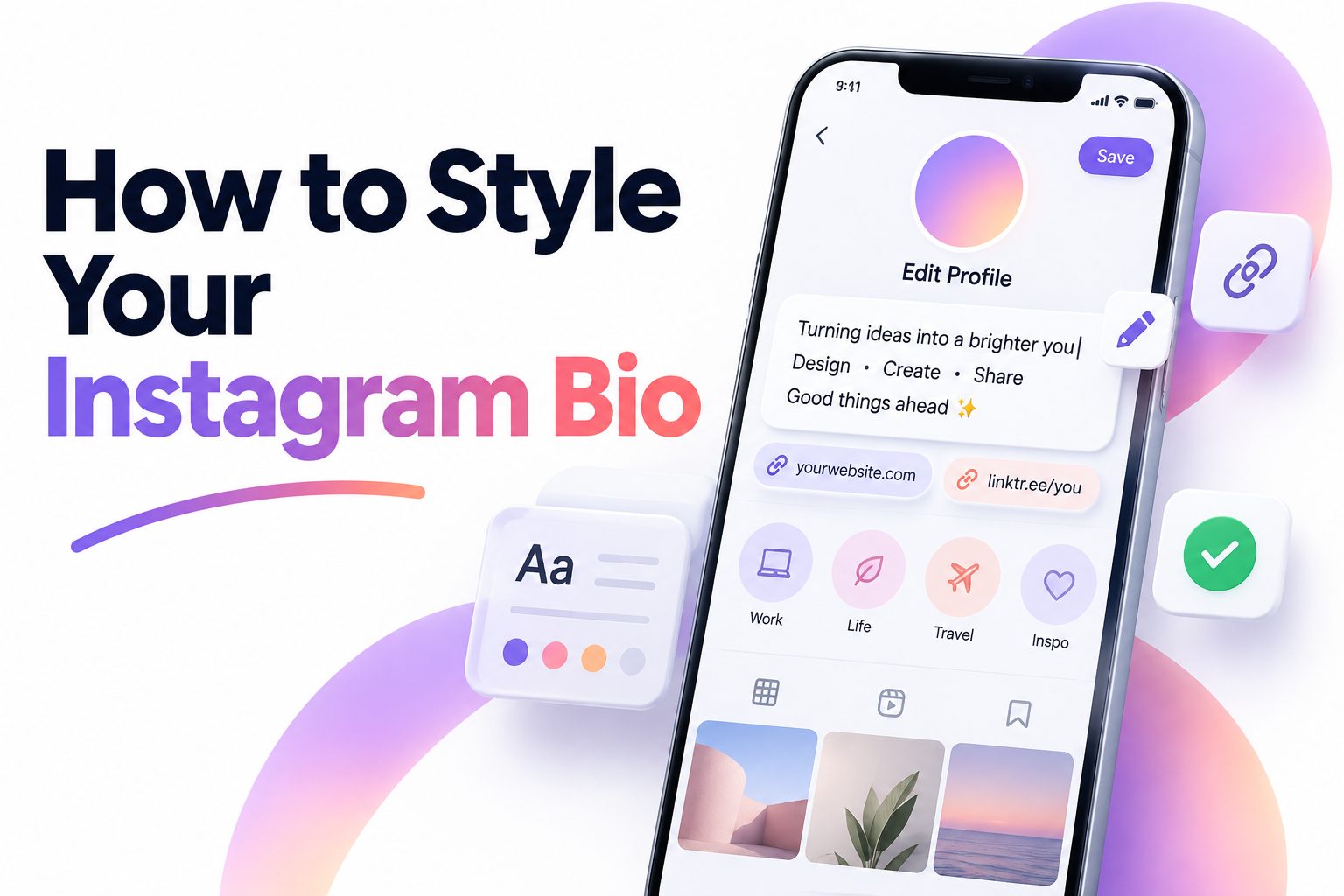
A strong Instagram bio does more than fill the small space beneath your profile photo. It introduces your personality, explains what you offer, and gives visitors a reason to follow, contact, or buy from you. Since people often judge an account within seconds, every word and visual detail matters.
Learning how to style your Instagram bio helps you turn limited characters into a clear, memorable first impression. The right combination of wording, spacing, emojis, keywords, and links can make a personal profile feel polished or help a business attract better leads. This article covers practical styling methods for creators, professionals, brands, and everyday users. You will learn how to define your message, arrange information, choose effective calls to action, and avoid common mistakes. Whether you are starting a new account or refreshing an established profile, these techniques will help your bio look intentional while remaining natural, useful, and easy to read.
Define the Purpose of Your Instagram Bio
Before changing fonts or adding emojis, decide what your profile needs to accomplish. A personal account may highlight interests and personality, while a business profile should explain its offer. Creators may need to establish a niche, showcase credibility, and direct followers toward their newest content.
Choose one primary outcome for profile visitors. You might want them to follow your account, visit your website, book a service, join an email list, or shop for products. A focused objective makes every bio element easier to select and prevents your message from becoming cluttered.
Know the Audience You Want to Attract
Your ideal followers should influence the language, tone, and details in your Instagram profile. A fitness coach targeting beginners will write differently from a luxury photographer serving engaged couples. Consider what your audience wants, what problems they face, and which words they commonly use.
Match your bio’s personality to both your audience and your actual content. Humor can work well for lifestyle creators, while concise authority may suit financial consultants. Consistency builds trust because visitors receive the same impression from your bio, posts, captions, highlights, and direct conversations.
Instagram Bio Planning Checklist
- Identify the main purpose of your account.
- Define the specific audience you want to reach.
- Choose one action visitors should take next.
- List the strongest benefit you provide.
- Select three relevant niche keywords.
- Decide whether your tone should be friendly, playful, bold, or professional.
- Remove details that do not support your main objective.
- Compare the bio with your recent posts for consistency.
Write a Clear and Memorable Name Field
The name field appears separately from your username and can help people find your account through Instagram search. Instead of repeating your handle, combine your real name or brand name with a descriptive term, such as “Maya Chen | Food Photographer” or “Northside Pilates Studio.”
Use phrases that accurately describe your specialty without turning the field into a list of keywords. The best choice sounds natural and matches what potential followers might search. Keep it readable, specific, and immediately recognizable, especially if your username does not clearly explain your identity or profession.
Lead With a Strong Value Proposition
Your value proposition tells visitors what they can expect from following you. Focus on the result, experience, or information you provide rather than using a vague label. “Easy dinners for busy parents” communicates more value than simply writing “Food lover and recipe creator.”
Businesses should state who they help and how they help them. A copywriter could write, “Conversion-focused emails for sustainable brands.” A travel creator might use, “Affordable weekend itineraries across Europe.” Specific language helps qualified visitors recognize that the account is relevant to their interests or needs.
Weak Bio Versus Strong Bio
Weak bio: Fitness coach helping people live better
Strong bio: Simple strength training for women over 40
Weak bio: Photographer based in London
Strong bio: Natural wedding photography across London and
Weak bio: Marketing tips and business advice
Strong bio: Practical email strategies for independent
Weak bio: Food, family, travel, and fun
Strong bio: Budget-friendly family trips with honest hotel
Use Line Breaks to Improve Readability
A bio written as one dense sentence can be difficult to scan on a phone. Line breaks create visual separation between your identity, value proposition, credibility, and call to action. Each line should have a distinct purpose rather than breaking sentences at random points.
Place the most important information near the top because visitors read from top to bottom. A simple layout may begin with what you do, continue with proof or personality, and finish with an action. Preview the profile on a mobile device to confirm that every line displays cleanly.
Choose Emojis With a Clear Purpose
Emojis can guide the eye, communicate personality, and save valuable character space. A pin can introduce a location, an envelope can signal contact information, and a downward arrow can draw attention to a link. Select symbols that support the message instead of decorating every line.
Limit your emoji palette so the bio still feels organized. One consistent style often looks more polished than an unrelated collection of colorful icons. Professional accounts can use subtle symbols, while playful brands may choose more expressive options that match their visual identity and established communication style.
Useful Emoji Placement Ideas
- Place a location pin before your city or service area.
- Use a briefcase beside a professional specialty.
- Add a calendar symbol before booking information.
- Position an envelope beside a contact instruction.
- Use a downward arrow directly above the profile link.
- Match emoji colors with your brand palette when practical.
- Avoid using several emojis to replace an important sentence.
- Check how each symbol appears on different mobile devices.
Add Relevant Keywords Naturally
Instagram profiles can appear in platform searches, so descriptive keywords deserve a place in your name field and bio. Include terms connected to your niche, service, location, or content category. A local baker might mention “custom cakes,” while a creator could include “home organization tips.”
Keywords should clarify your offer rather than make the bio sound like a search-results page. Use one or two strong phrases in complete, natural statements. Review [Internal Link: Instagram Keyword Strategy] for additional ideas about matching profile language with the terms your audience is likely to search.
Show Personality Without Losing Clarity
People follow accounts that feel distinctive, but personality should not hide essential information. A clever phrase can make your bio memorable when visitors can still tell what you post or sell. Place a short personal detail after your core message rather than leading with an unexplained joke.
Use words that sound like your natural speaking voice. If your captions are relaxed and conversational, an overly corporate bio creates a mismatch. Small details such as “Fueled by espresso” or “Making spreadsheets less painful” can add character while reinforcing the mood of your account.
Key Benefits of a Well-Styled Bio
- Visitors understand your account within a few seconds.
- Relevant keywords can improve profile visibility in search.
- Clear formatting makes information easier to scan.
- A focused message attracts better-matched followers.
- Consistent wording strengthens personal or business branding.
- A direct call to action can increase clicks and inquiries.
- Thoughtful personality cues make the profile more memorable.
- Strategic contact details reduce friction for potential customers.
Include Credibility That Matters
Credibility signals help visitors trust your expertise, particularly when you sell services, teach a skill, or discuss specialized subjects. Useful proof might include years of experience, a meaningful certification, a recognizable publication, customer results, or the size of a community you have genuinely built.
Choose one impressive and relevant detail instead of listing every achievement. “Registered dietitian” is useful for a nutrition account, while “Helping 500+ founders” may support a business consultant. Never exaggerate results or use unclear claims, because credibility disappears quickly when visitors cannot verify what you say.
Create a Direct Call to Action
A call to action tells visitors what to do after reading your profile. Phrases such as “Book a consultation,” “Download the free planner,” or “Shop the latest collection” are stronger than “Click below.” They explain both the action and the expected destination.
Keep one primary call to action whenever possible. Several competing requests can leave visitors unsure about the next step. If your priorities change during a launch, event, or campaign, update the call to action temporarily and restore your evergreen message after the promotion ends.
Effective Call-to-Action Examples
For service providers:
-
- Book your free 20-minute consultation
- View packages and current availability
- Send a direct message for project inquiries
For creators:
-
- Watch the newest video
- Get my weekly editing tips
- Join the private subscriber community
For online stores:
-
- Shop the new seasonal collection
- Claim your first-order discount
- Browse this week’s bestselling products
For educators:
- Download the free lesson plan
- Register for the next live workshop
- Start with the beginner resource library
Select and Label Your Link Carefully
Instagram gives you limited link space, so the destination should support your current goal. Send visitors directly to the promised page rather than making them search through a homepage. If the bio promotes a free checklist, the link should open the checklist landing page.
A multi-link page can work when your audience genuinely needs several choices. Keep its menu short, use descriptive button labels, and place the highest-priority link first. Remove expired campaigns regularly. For more guidance, see [Internal Link: Social Media Landing Page Tips] before building your profile destination.
Use Contact and Category Features Wisely
Professional Instagram accounts can display contact buttons, category labels, and business details outside the main bio text. These features save characters and make it easier for visitors to email, call, request directions, or identify the type of business they are viewing.
Only display information that is useful and safe to share publicly. A local storefront may benefit from an address, while a home-based freelancer may prefer an email button. Hiding an unnecessary category label can also create a cleaner layout without reducing the profile’s practical value.
Profile Link and Contact Checklist
- Confirm that every link opens correctly on mobile.
- Match the call-to-action wording with the destination page.
- Use a recognizable and trustworthy domain.
- Remove outdated offers and unavailable products.
- Keep multi-link menus short and logically ordered.
- Test email, phone, booking, and direction buttons.
- Add tracking parameters when campaign measurement matters.
- Never publish private contact information unnecessarily.
Consider Stylish Fonts With Caution
Decorative font generators replace standard letters with Unicode characters, which can create bold, cursive, or unusual effects. A short stylized name may add visual interest, but long decorative sentences often become difficult to read. Some screen readers and devices may interpret those characters poorly.
Use standard text for important keywords, offers, and calls to action. If you want decorative lettering, reserve it for a brief accent that remains recognizable. Accessibility and clarity should take priority because an attractive bio has little value when part of your audience cannot read it.
Keep the Bio Accessible to Everyone
Accessibility improves the profile experience for people using screen readers, smaller displays, or different devices. Write straightforward sentences, avoid long strings of symbols, and do not use emojis as substitutes for essential information. Clear capitalization also makes usernames, hashtags, and phrases easier to interpret.
Add spaces between ideas and test the finished bio aloud. If it sounds confusing when spoken, revise the structure. Instagram styling should make information easier to process, not merely more decorative. Accessible choices usually improve readability for every visitor, regardless of how they use the platform.
Accessible Styling Practices
- Write essential information with standard characters.
- Limit repeated emojis and decorative symbols.
- Use capital letters to separate words in hashtags.
- Avoid placing spaces between every letter.
- Keep sentences concise and grammatically clear.
- Do not communicate meaning through color alone.
- Check the bio with a screen reader when possible.
- Ask another person to review it on a different device.
Match the Bio With Your Visual Branding
Your profile photo, bio language, highlight covers, and recent posts should create one recognizable identity. A minimalist brand may use concise text and restrained emojis, while a vibrant entertainment account can support a more energetic style. The bio should feel connected to the content below it.
Consistency does not require every visual element to look identical. Instead, repeat a small set of cues, such as tone, colors, vocabulary, or icon style. When visitors move from your profile to your website, they should feel that both spaces belong to the same person or business.
Organize Story Highlights Below the Bio
Story Highlights extend the information your bio cannot hold. Useful categories may include About, Services, Reviews, FAQs, Results, Shop, or Start Here. Select labels that visitors immediately recognize, and keep the most valuable categories near the beginning of the row.
Create simple highlight covers that remain legible at a small size. Each highlight should contain current stories arranged in a useful sequence. Remove expired prices, old schedules, and discontinued offers. Well-maintained highlights reinforce the promise made in your bio and help visitors take action confidently.
Highlight Ideas by Account Type
Personal brand:
-
- Start Here
- About Me
- Media
- Behind the Scenes
Service business:
-
- Services
- Results
- Reviews
- Booking
Online store:
-
- New Items
- Bestsellers
- Sizing
- Delivery
Content creator:
-
- Tutorials
- Resources
- Favorites
- Collaborations
Local business:
- Menu
- Location
- Events
- Customer Stories
Adapt Your Bio for Different Account Types
A personal bio can prioritize identity, interests, values, and personality. For example, “Berlin-based designer sharing small-space interiors and weekend cafés” gives visitors several clear reasons to connect. Personal profiles benefit from warmth, but they still need a recognizable theme if growth is the goal.
Business and creator bios should emphasize audience benefits and next steps. A consultant needs positioning and proof, while a shop needs product clarity and purchasing information. Avoid copying another account’s wording. The strongest profile reflects your specific offer, voice, audience, and current priorities.
Refresh Your Bio at the Right Time
Your bio is not a permanent statement. Review it when your niche changes, you launch a new offer, your contact details change, or seasonal information becomes relevant. Even established accounts should check the profile every few months for broken links and outdated claims.
Do not rewrite the bio merely because you feel bored with it. Frequent changes can weaken recognition and make campaign results harder to compare. Update with a purpose, record the previous version, and monitor profile visits, follows, link clicks, inquiries, or sales after meaningful revisions.
Signs Your Bio Needs an Update
- Visitors frequently ask what you do.
- Your displayed link leads to an expired page.
- The bio promotes an offer you no longer provide.
- Your niche or target audience has changed.
- Contact information is missing or incorrect.
- The wording no longer matches your content.
- Profile visits are strong, but follows remain low.
- Your call to action does not produce measurable activity.
Avoid Common Instagram Bio Mistakes
Vague statements are among the biggest problems. Words such as “dreamer,” “entrepreneur,” or “helping you succeed” reveal little without context. Replace broad labels with concrete descriptions of your content, expertise, products, or audience. Specificity helps visitors decide whether your profile belongs in their feed.
Other common mistakes include excessive hashtags, unreadable fonts, random emojis, several competing calls to action, and links without explanation. Poor spelling also damages trust. Read the bio carefully after publishing because mobile line wrapping can create awkward spacing that was not visible while editing.
Test Bio Changes With Real Data
Track results before and after changing your profile. Relevant Instagram Insights may include profile visits, follows, website taps, email taps, and other actions. Compare similar time periods and avoid making several major changes simultaneously if you want to identify what produced the improvement.
Numbers need context. A smaller increase in highly qualified inquiries may matter more than a large rise in casual profile visits. Allow enough time for a fair comparison, especially on accounts with limited traffic. Combine performance data with comments, direct messages, and customer feedback.
Simple Bio Review Scorecard
Give each statement one point:
- The bio identifies who you are.
- It explains what followers will receive.
- The wording includes a relevant search term.
- Every line is easy to scan.
- The tone matches your published content.
- Credibility claims are accurate and useful.
- The call to action is specific.
- The link supports the stated action.
- Contact options work correctly.
- The profile remains readable without decorative fonts.
A score of eight or higher suggests a focused profile. Lower scores reveal which elements deserve attention first.
Conclusion
An effective Instagram bio combines clarity, personality, and direction in a remarkably small space. Start by identifying the audience you want to reach and the single action you want visitors to take. Then write a specific value proposition, include relevant keywords, and arrange each idea with readable line breaks. Emojis, stylish fonts, and symbols can support the presentation, but they should never make essential information harder to understand.
Knowing how to style your Instagram bio also means treating the profile as an active part of your content strategy. Match it with your visual branding, use Highlights to provide supporting details, and connect the call to action with a useful destination. Review links and contact options regularly, update outdated offers, and measure whether changes improve follows, clicks, or qualified inquiries. A polished bio does not need to sound clever or crowded. It simply needs to tell the right people who you are, why your account matters, and what they should do next.
FAQ
How long should an Instagram bio be?
Instagram bios allow limited space, so prioritize the information that affects a visitor’s decision. State what you do, who the account serves, and what action to take. Remove unnecessary labels, repeated ideas, and decorative text that weakens clarity.
Should I use hashtags in my Instagram bio?
Use a branded hashtag when it helps visitors find community content or campaign posts. General hashtags rarely strengthen a bio and are not a substitute for descriptive keywords. Keep hashtags limited so they do not distract from your offer or call to action.
Are fancy Instagram bio fonts safe to use?
Decorative fonts use Unicode characters that may be difficult for screen readers, search tools, or some devices to interpret. Use them sparingly for short accents. Keep your name, keywords, services, and call to action in standard, accessible text.
How often should I change my Instagram bio?
Review your bio every few months and update it whenever your offer, audience, link, availability, or contact information changes. Avoid unnecessary weekly rewrites. Consistent wording supports recognition, while purposeful updates keep the profile accurate and relevant.
What makes an Instagram bio attractive?
An attractive bio is clear, visually balanced, and consistent with the account’s personality. Short lines, selective emojis, specific wording, and a direct call to action create structure. Strong styling supports the message instead of competing with it.
0 Comments